By Roman Aglaganov
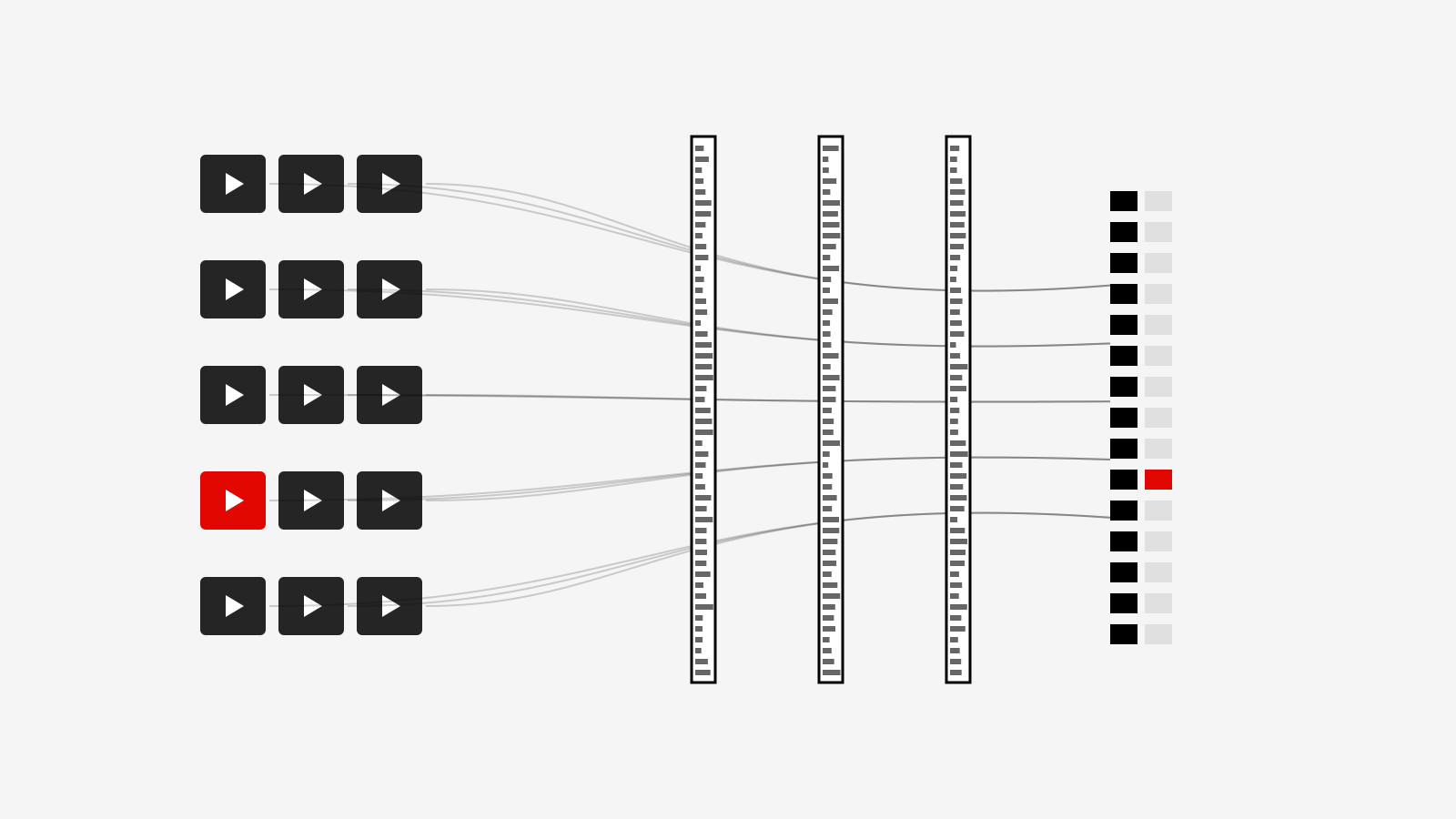
Checking videos for deepfakes usually means running each one through a big neural network on a GPU, one after another. A team led by Aydogan Ozcan at UCLA tried something different: let light do part of the work. Their study, published in the journal eLight, describes an optical processor that screens many videos at the same time.
How it works
A small digital encoder first extracts compact features from each video. Those features become a pattern of light, shaped by a programmable device called a spatial light modulator. The light then passes through a passive optical decoder: layers of material that bend light in carefully designed ways. Paired detectors at the end read out an authenticity score for each video. Because light travels through the decoder all at once, many videos are processed in a single pass, and the passive layers need no power while doing it.
The results
Accuracy: screening 15 videos from the Celeb-DF benchmark per pass, the system averaged 97.79% accuracy, with 99.86% sensitivity, meaning very few fakes slipped through, and 95.72% specificity. At 18 videos per pass, accuracy was 96.13%.
Newer fakes: after minimal fine-tuning, it reached 94.80% accuracy on unseen videos generated by Google’s Veo 3.
Hard to fool: part of the model is physically built into the optical layers, which makes it difficult for an attacker to measure or copy, and so harder to craft fakes designed to evade it.
Where it fits
The researchers present it as a fast, low-energy first filter, not a replacement for detailed digital analysis: wave through the obvious, flag the suspicious for a closer look. With platforms facing millions of uploads a day, that kind of cheap triage could matter more than one more point of accuracy.