Artificial intelligence has been “about twenty years away” for roughly seventy years. Along the way it has been promised, over-promised, defunded, renamed, rediscovered and, eventually, put in charge of autocomplete. Here is the short, slightly irreverent tour.
1950: Can machines think? (Asking for a friend)
Alan Turing opened his 1950 paper “Computing Machinery and Intelligence” with the question “Can machines think?”, then immediately decided it was too vague and swapped it for a party game. In the imitation game, a judge chats by text with a hidden human and a hidden machine and tries to tell which is which. Turing predicted that by about the year 2000, a machine would fool an average judge 30% of the time after five minutes of questioning. He was off by a couple of decades, which by AI-prediction standards is a bullseye.
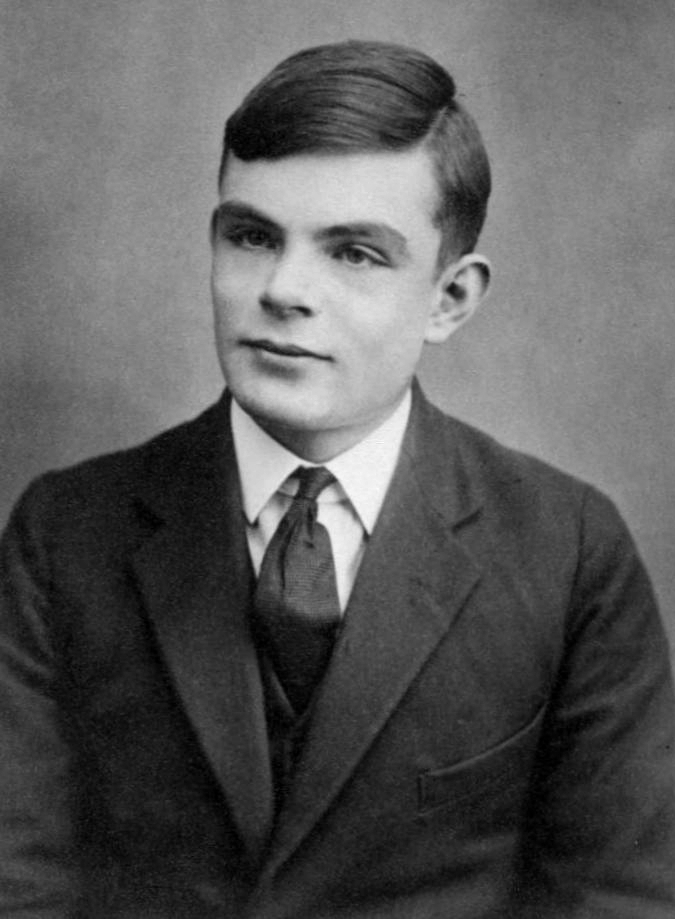
Fun fact: Turing was also a serious marathon runner. In 1947 he ran a marathon in 2 hours 46 minutes, only about 12 minutes slower than the winning time at the 1948 Olympics. The father of AI could have outrun most of his grandchildren, who do not have legs.
1956: The longest summer project in history
In 1955, John McCarthy, Marvin Minsky, Nathaniel Rochester and Claude Shannon asked for funding for a summer workshop at Dartmouth College. Their proposal coined the term artificial intelligence and confidently stated that “a significant advance can be made” on making machines use language, form concepts and improve themselves “if a carefully selected group of scientists work on it together for a summer.”
The workshop happened in 1956. The summer is still going.
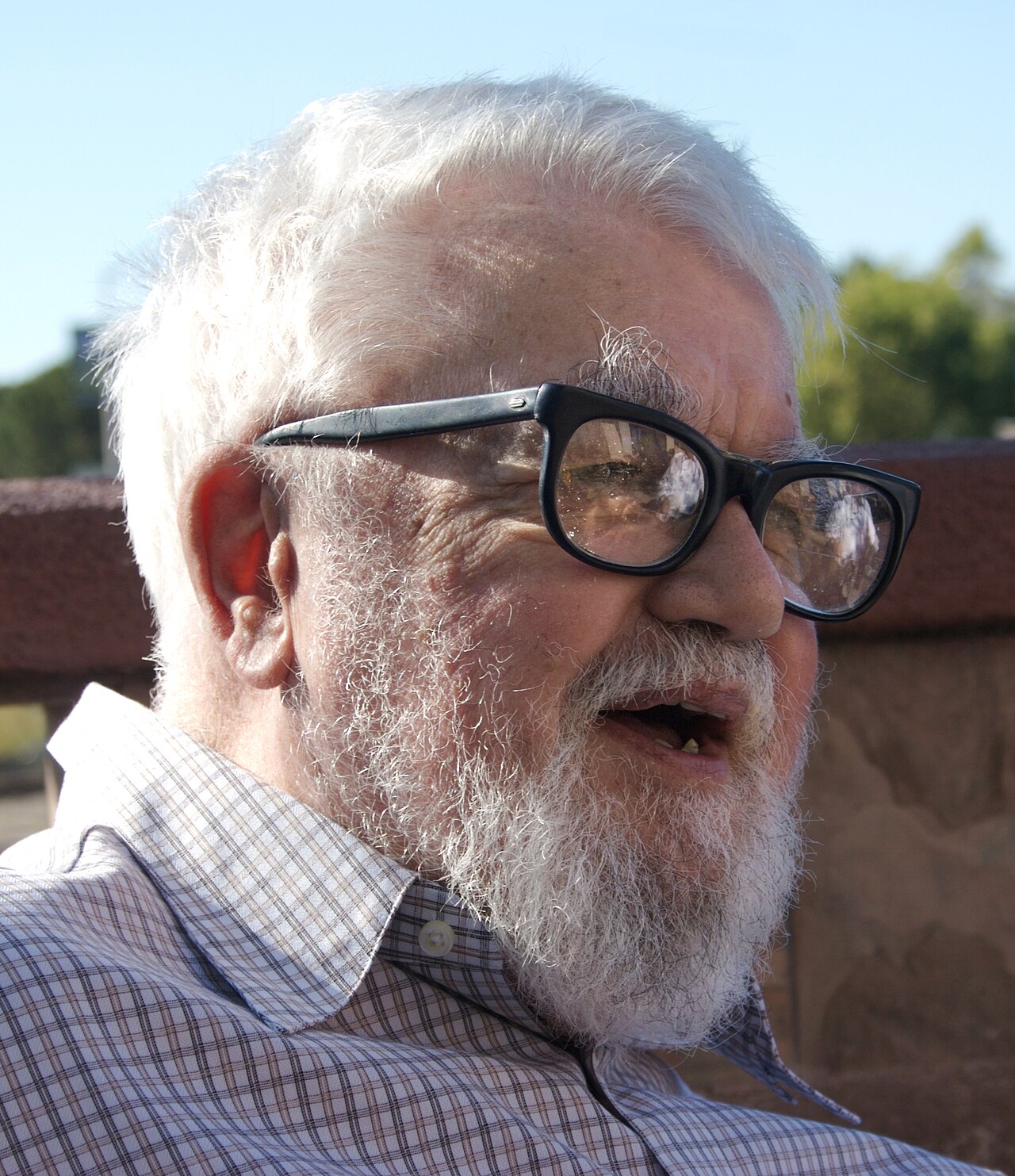
Fun fact: Two years later McCarthy invented Lisp, a programming language famous for its parentheses. AI researchers then spent decades ((((closing)))) them.
1958: The machine that would be conscious of its own existence
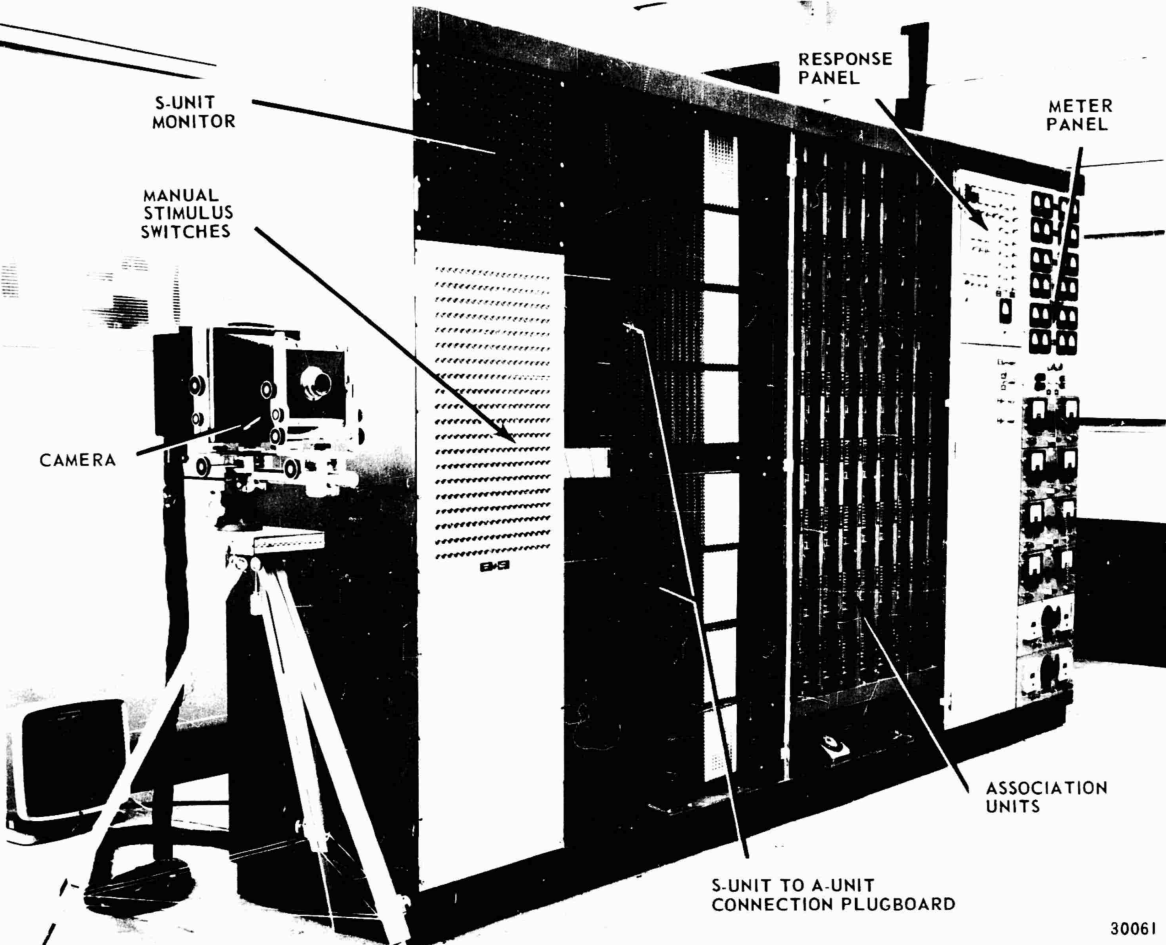
Frank Rosenblatt’s perceptron was an early artificial neural network, and the Mark I Perceptron was its hardware version: a room-sized machine with a 20×20 grid of 400 light sensors for an eye, wired to motor-driven potentiometers that adjusted its weights as it learned. It could learn to tell simple shapes apart, such as marks on the left from marks on the right.
The press took it calmly. In 1958 The New York Times reported that the Navy expected the perceptron to be able to “walk, talk, see, write, reproduce itself and be conscious of its existence.” It mostly told left from right.
1966: ELIZA, the therapist who only asked questions
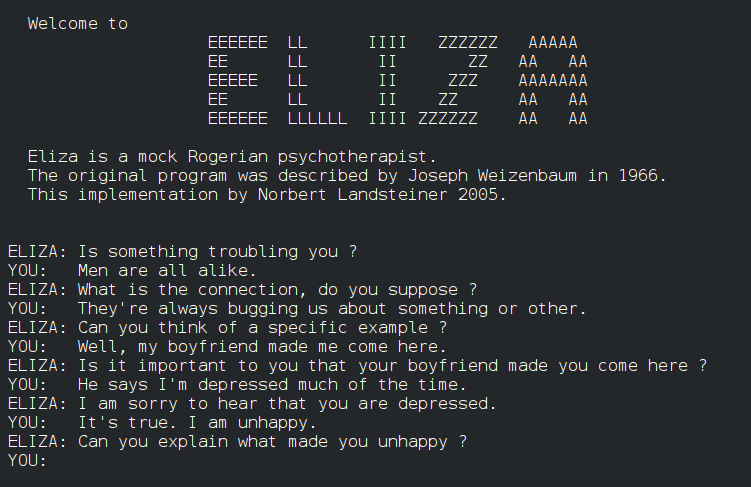
Joseph Weizenbaum at MIT wrote ELIZA, a program that played a psychotherapist by turning your sentences back into questions. Say “I am unhappy” and ELIZA asks why you are unhappy. There was no understanding at all, just pattern matching and very good manners.
It worked a little too well. Weizenbaum’s secretary, who had watched him build the program, reportedly asked him to leave the room so she could talk to ELIZA in private. Weizenbaum was so unsettled by how readily people confided in a script that he spent much of his later career warning about trusting computers too much.
1966–1972: Shakey thinks before it moves (for a while)
Shakey, built at SRI International, was the first mobile robot that could reason about its own actions: look at a room, make a plan, then trundle off to push a box. It was named Shakey because it shook. Planning took a long time, so its triumphs were best watched with a sandwich.
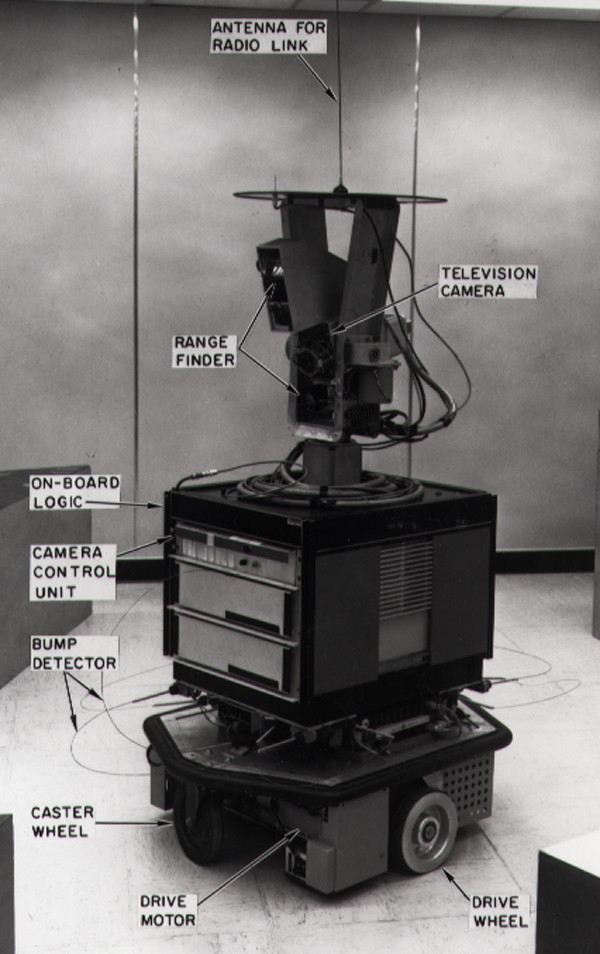
Fun fact: To help Shakey find its way, its team invented the A* search algorithm in 1968. A* now plans routes in video games and navigation apps, which makes Shakey the great-grandparent of every game character that walks into a wall.
1970s–1980s: Winter is coming (twice)
Big promises met small computers. In 1969, Minsky and Papert’s book Perceptrons showed the limits of simple neural networks, and interest in them cooled. In 1973 the Lighthill Report told the British government that AI had not delivered, and funding was cut. This became known as the first AI winter: like a normal winter, but the thing that hibernates is grant money.
The 1980s brought a thaw with expert systems: programs packed with hand-written if-then rules from human specialists. Companies loved them, and specialised Lisp machines were built to run them. Then cheaper desktop computers caught up, the Lisp machine market collapsed around 1987, and the second winter arrived. Researchers learned to say “machine learning” instead of “AI” at parties.
1997: Deep Blue checkmates a world champion
In 1996, world chess champion Garry Kasparov beat IBM’s Deep Blue 4–2. IBM upgraded the machine, asked for a rematch, and in May 1997 Deep Blue won 3½–2½. It could evaluate about 200 million chess positions per second. Kasparov could evaluate one very annoyed opinion about the result, and suspected human help (IBM denied it).
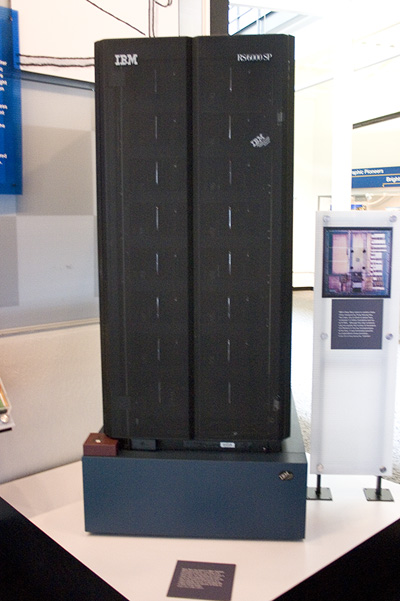
Fun fact: According to one of Deep Blue’s designers, a bug in the first game of the rematch made it play an essentially random move. Kasparov reportedly read it as a sign of frighteningly deep understanding. The first great AI bluff was an accident.
2002: AI gets a job (vacuuming)
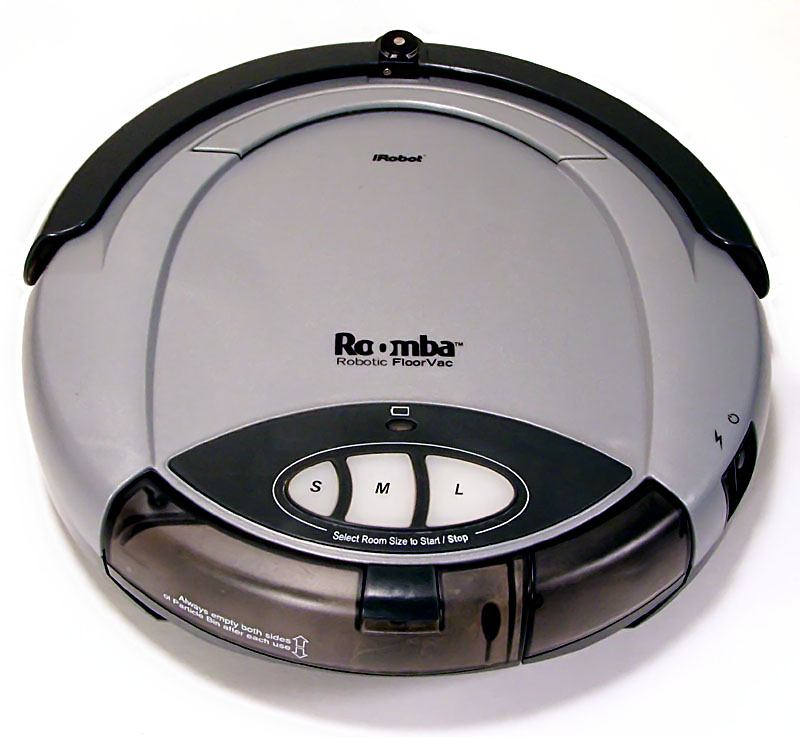
After decades of chess and philosophy, one of AI’s first mass-market hits was a disc that cleans floors. iRobot’s Roomba launched in 2002, steering itself with simple behaviours instead of grand plans: bump into something, turn, try again. It sold millions. People gave theirs names, and cats rode them like tiny chariots.
2011: Watson wins Jeopardy! (mostly)
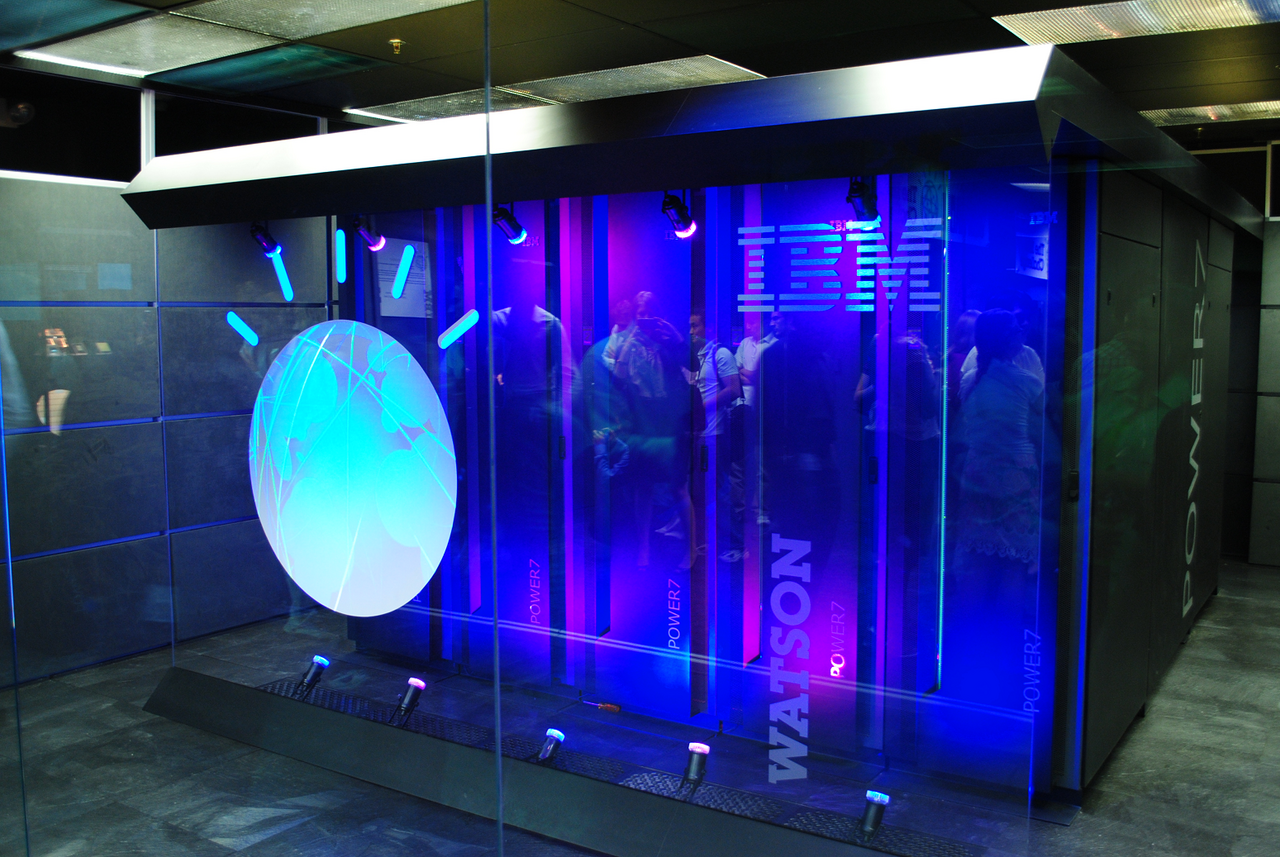
IBM’s Watson took on the two greatest Jeopardy! champions, Ken Jennings and Brad Rutter, and won comfortably. Jennings conceded in style, adding to his final answer: “I for one welcome our new computer overlords.”
Watson was not flawless. In a Final Jeopardy round in the category “U.S. Cities,” it answered “Toronto.” Toronto is many things, but a U.S. city is not one of them.
2012: Deep learning finds the cats
Neural networks, banished in the 1970s, came back with more data and much faster hardware. In 2012 a network called AlexNet, trained on two gaming graphics cards, won the ImageNet image-recognition contest by a huge margin, and suddenly everyone wanted GPUs.
The same year, a Google team showed a giant network, running on 16,000 processor cores, ten million frames from YouTube videos without any labels. Among other things, it learned on its own to recognise cats. Humanity built the internet to share cat videos, and the internet taught the machines the same thing.
2016: AlphaGo and Move 37
Go was supposed to be safe for a long time: there are more possible board positions than atoms in the observable universe. In March 2016, DeepMind’s AlphaGo beat Lee Sedol, one of the strongest players in the world, 4–1 in Seoul.
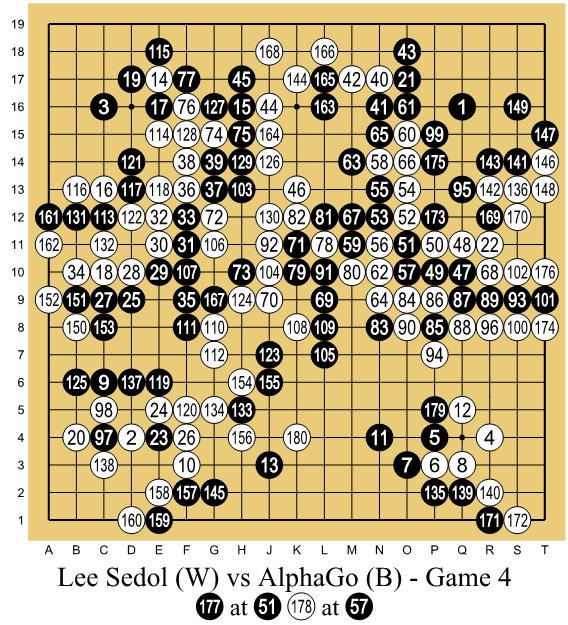
In game 2, AlphaGo played Move 37, which it estimated a human would play about one time in ten thousand. Commentators thought it was a mistake. It was not. In game 4, Lee answered with his own brilliant, unexpected Move 78 and won, the only game a human took from AlphaGo in that match.
2017–today: Attention is all you need (and a lot of electricity)
In 2017, Google researchers published “Attention Is All You Need,” introducing the transformer, the architecture behind today’s large language models. In November 2022, OpenAI released ChatGPT, and by one widely reported estimate it reached about 100 million users in two months, faster than any consumer app before it.
Seventy years after Turing’s party game, the most common complaint about chatbots is not that they cannot hold a conversation. It is that they will not stop.
What’s next?
Nobody knows. But if history is any guide, it is about twenty years away.