 By Roman Aglaganov
The debate about AI and work tends to swing between two cartoons: robots take every job, or nothing changes. The evidence so far points somewhere more interesting.
The call-centre study
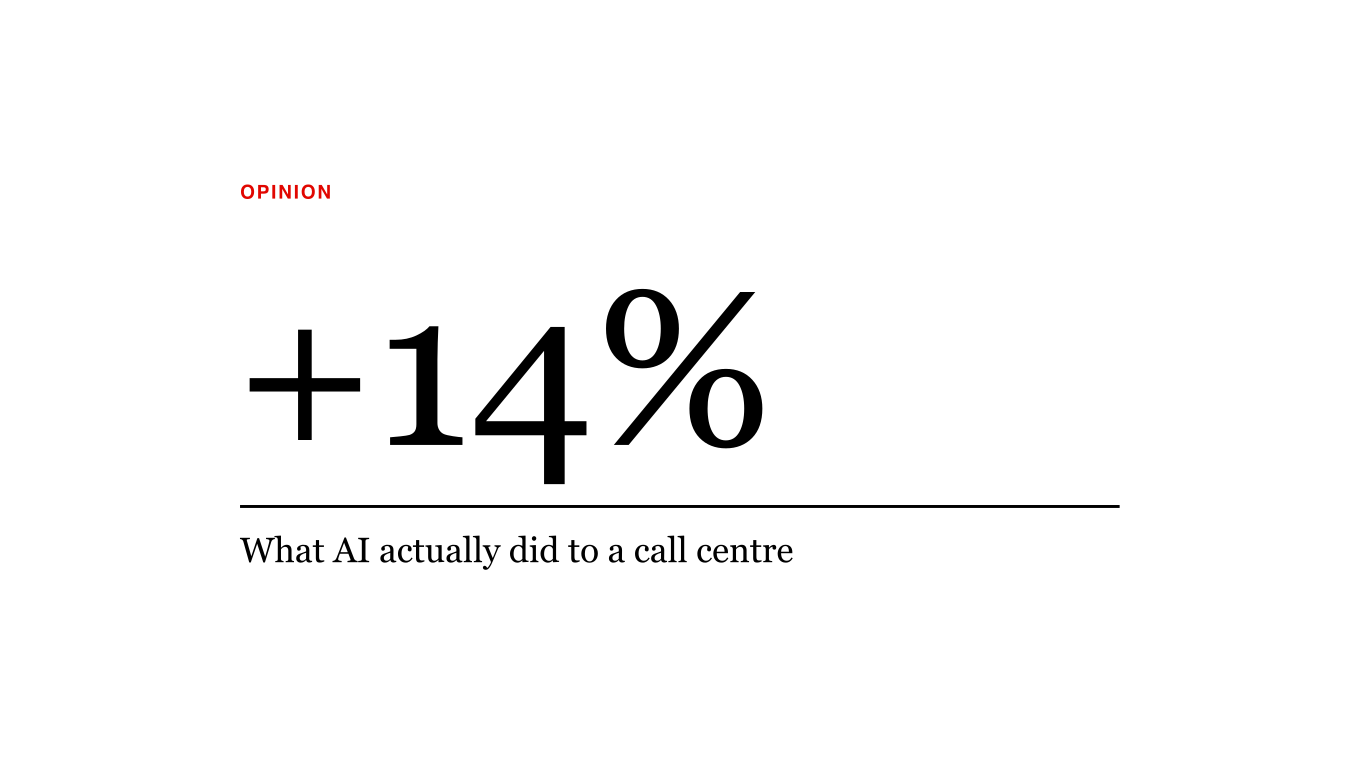
One of the most careful studies, “Generative AI at Work” by Erik Brynjolfsson, Danielle Li and Lindsey Raymond, followed more than 5,000 customer-support agents as an AI assistant was rolled out. On average, agents with the tool resolved about 14% more issues per hour. The striking part was who gained: the least experienced and lowest-skilled agents improved by around a third, while top performers gained little. The AI had, in effect, bottled the know-how of the best agents and handed it to the newest.
The good news
If that pattern holds, AI could be a great leveller, letting newcomers perform like veterans sooner, and making expertise available to people who never had access to a mentor. Customers seemed happier too: with the assistant, fewer of them asked to speak to a manager.
The worry
Junior jobs are where people learn. If AI does the routine work that used to train beginners, companies may hire fewer of them, and in ten years wonder where all the senior people went. Experts who never had to struggle through the basics may also be worse at spotting when the AI is wrong.
My view: the question is not whether AI takes jobs, but whether employers use it to cut the bottom rung of the ladder or to help more people climb it. That is a choice, not a law of nature, and it is worth making on purpose.