 By Roman Aglaganov
In November 2022, after his grandmother died, Jake Moffatt went to Air Canada’s website to book a flight to Toronto and asked its chatbot about bereavement fares. The chatbot told him he could buy a full-price ticket and claim the discount back within 90 days. He did. Air Canada then refused the refund, pointing to a different page of its website that said bereavement fares could not be claimed after travel.
“A separate legal entity”
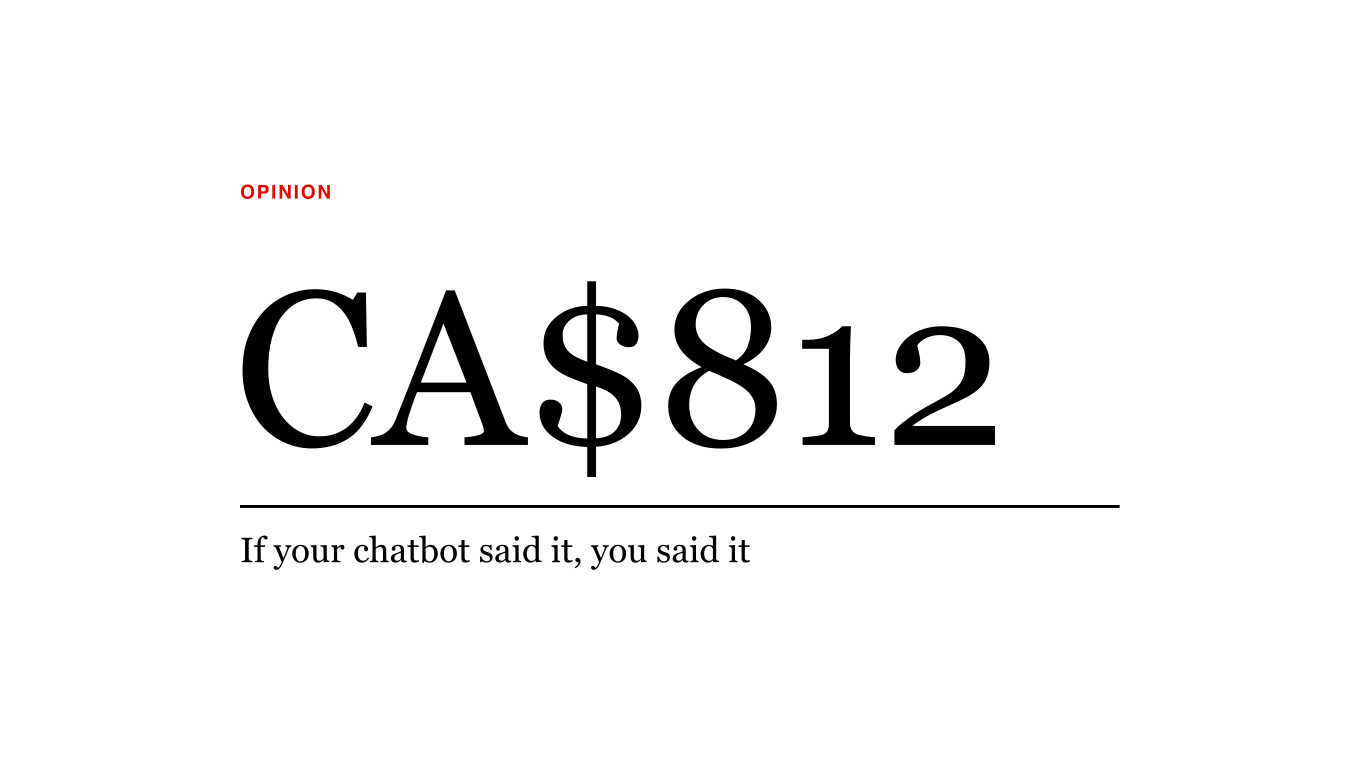
Moffatt took the airline to British Columbia’s Civil Resolution Tribunal, a small-claims body. Air Canada’s defence, in effect, was that the chatbot was a separate legal entity responsible for its own actions. The tribunal member called this a “remarkable” submission and rejected it: the chatbot is part of Air Canada’s website, and Air Canada is responsible for everything on its website. In February 2024, Moffatt was awarded CA$812 in damages, plus interest and fees.
Small case, big point
This was a tiny claim, but it made headlines around the world because it answered a question many companies had hoped to leave vague. I think the tribunal got it exactly right, and the principle should be obvious: if you choose to let software speak to your customers in your name, its words are your words.
The alternative is absurd. Companies would get all the savings of automated customer service and none of the accountability, and customers would have to double-check every answer against the small print, which defeats the purpose of having a helpful assistant at all.
What companies should take from it
Ground the bot: connect it to your actual policies, and test what it says about the expensive questions: refunds, cancellations, compensation.
Make escalation easy: a human should be one click away when money or grief is involved.
Own the mistakes: honouring an occasional wrong answer is cheaper than defending it in public. Air Canada saved CA$812 by fighting and lost a great deal more in reputation.