 By Roman Aglaganov
Not every AI job needs a paragraph. Is this email spam? Which team should handle this ticket? Should an agent go ahead, or ask a human first? Microsoft’s new model, Microsoft-Decision-1, released on 9 October, is built only for questions like these.
How it is different
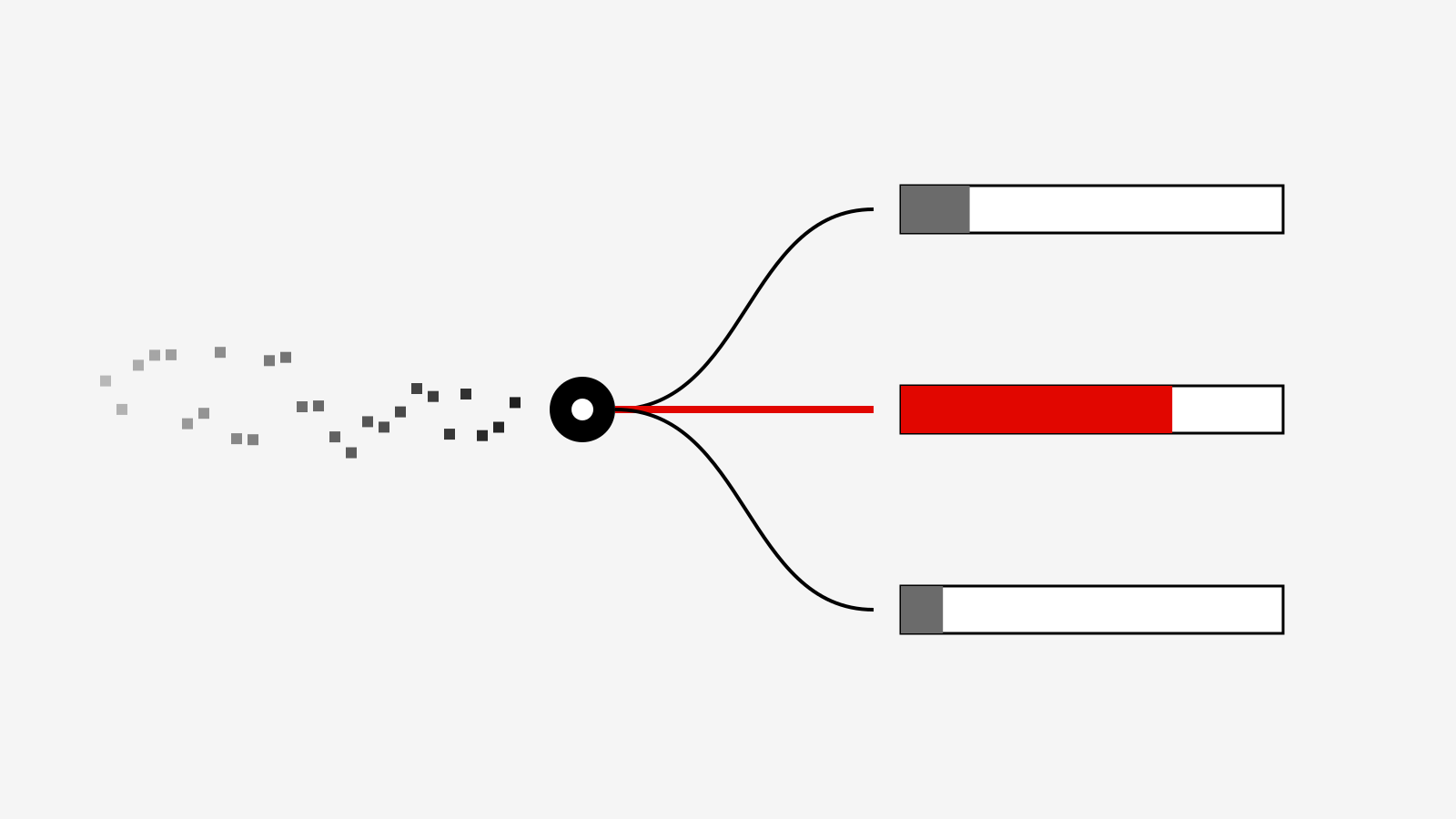
A chatbot answers by generating text, which then has to be read and interpreted. A decision model takes some text, called the state, plus one or more questions with fixed answers. It returns a calibrated probability for each answer, in a format software can act on straight away. Because the answer carries its own confidence, an app can decide to act, wait or send the case to a person.
Microsoft lists the uses as routing, classification, prioritisation, verification, workflow control, guardrails for agents, and grading other AI models’ work. It is clear about what it is not for: writing, conversation, translation or summaries.
The numbers
Size and price: it is a small model, post-trained from Alibaba’s open Qwen3.5-9B, with a 33,000-token context. On OpenRouter it costs $0.042 per million input tokens, and output is free.
Microsoft’s claims: it had the highest accuracy in Microsoft’s 36-benchmark comparison of nearly 150,000 questions, and was the fastest measured: 2.5 times quicker than the runner-up, H2O-Lightning-4B, and 35 times quicker than OpenAI’s GPT-6 Sol. These are Microsoft’s own tests; independent results will follow.
Where to get it: Microsoft Foundry and OpenRouter. Its weights are updated continually while the interface stays the same.
Why it matters
As AI agents take on more work, they make thousands of small decisions. Running each one through a frontier chatbot is slow and expensive, and the answer can be hard to check. Small, cheap models that output a number are easier to test, monitor and set thresholds for. One caution: a confident probability is still a guess, so decisions that affect people, like hiring or credit, should never rest on it alone.